Most people wish to remain in familiar environments when they require care, as staying close to family, friends, and pets while engaging in meaningful activities significantly enhances quality of life.
In-home care allows individuals to receive support while living in their own homes or apartments. This setting provides personal freedom, comfort, and proximity to loved ones.
Services Provided:
2. Residential Care
Residential care involves living in a specialized facility that offers a range of services. These settings cater to individuals who need more consistent supervision or specialized care.
Types of Residential Care:
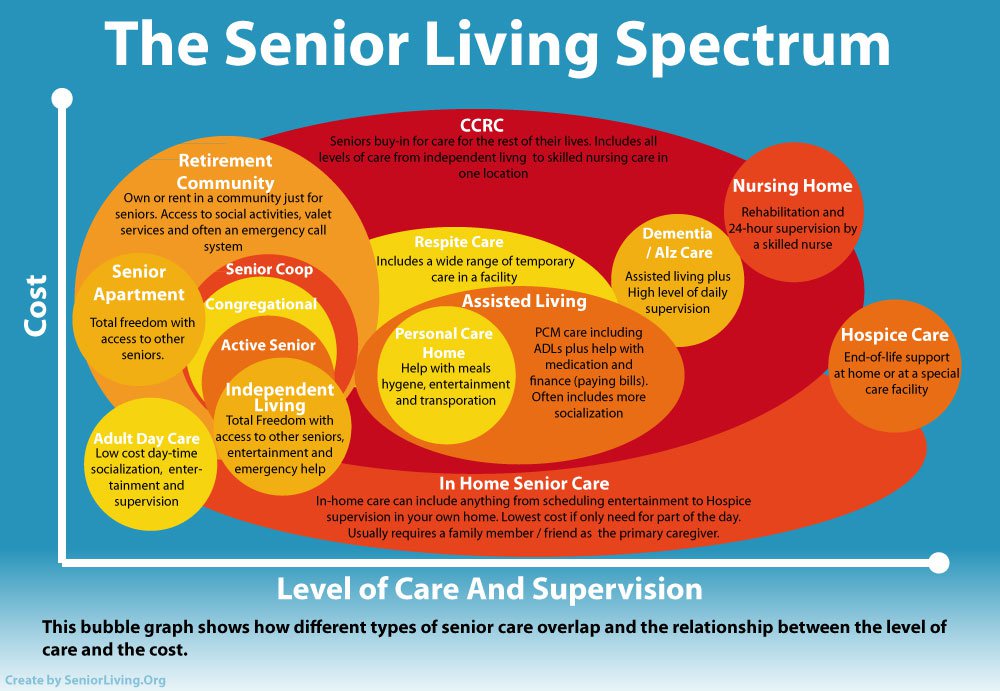
The type of care setting a person selects depends on their specific needs for services and support. Below is an elaboration of the two main types of care settings—In-Home Care and Residential Care—with examples of their features and benefits.
1. In-Home Care
1. In-Home Care
In-home care allows individuals to receive support while living in their own homes or apartments. This setting provides personal freedom, comfort, and proximity to loved ones.
Services Provided:
- Assistance with activities of daily living (ADLs), such as bathing, dressing, and meal preparation.
- Professional health care services, such as nursing, physical therapy, or wound care.
- Community resources like Meals on Wheels for food delivery or hospice services for end-of-life care.
- Accessibility support, including home modifications (e.g., installing grab bars or wheelchair ramps) and communication aids like sign language interpreters or hearing assistive technology.
2. Residential Care
Residential care involves living in a specialized facility that offers a range of services. These settings cater to individuals who need more consistent supervision or specialized care.
Types of Residential Care:
- Adult Family Homes
- Small neighborhood homes offering care for 2 to 8 residents.
- Provide meals, laundry, and supervision in a family-like environment.
- Assisted Living Facilities
- Larger facilities ranging from 7 to hundreds of residents.
- Provide room, board, and help with daily activities.
- Often include occasional nursing care.
- Enhanced Services Facilities
- Facilities for up to 16 residents, focusing on intensive behavioral health interventions.
- Staff specialize in managing mental health challenges, developmental disabilities, or behavioral disorders.
Key Considerations for Choosing a Care Setting
- Independence: In-home care allows clients to retain control over their environment, while residential care provides structured support.
- Social Interaction: Residential settings offer opportunities to socialize with others, but in-home care preserves existing community connections.
- Specialized Services: Enhanced services facilities or adult family homes may be ideal for those with specific medical or behavioral health needs.
Whether in-home care or residential care, the primary goal is to ensure safety, comfort, and a high quality of life for the individual receiving care.
By understanding and supporting these options, caregivers play a vital role in fostering independence and dignity.