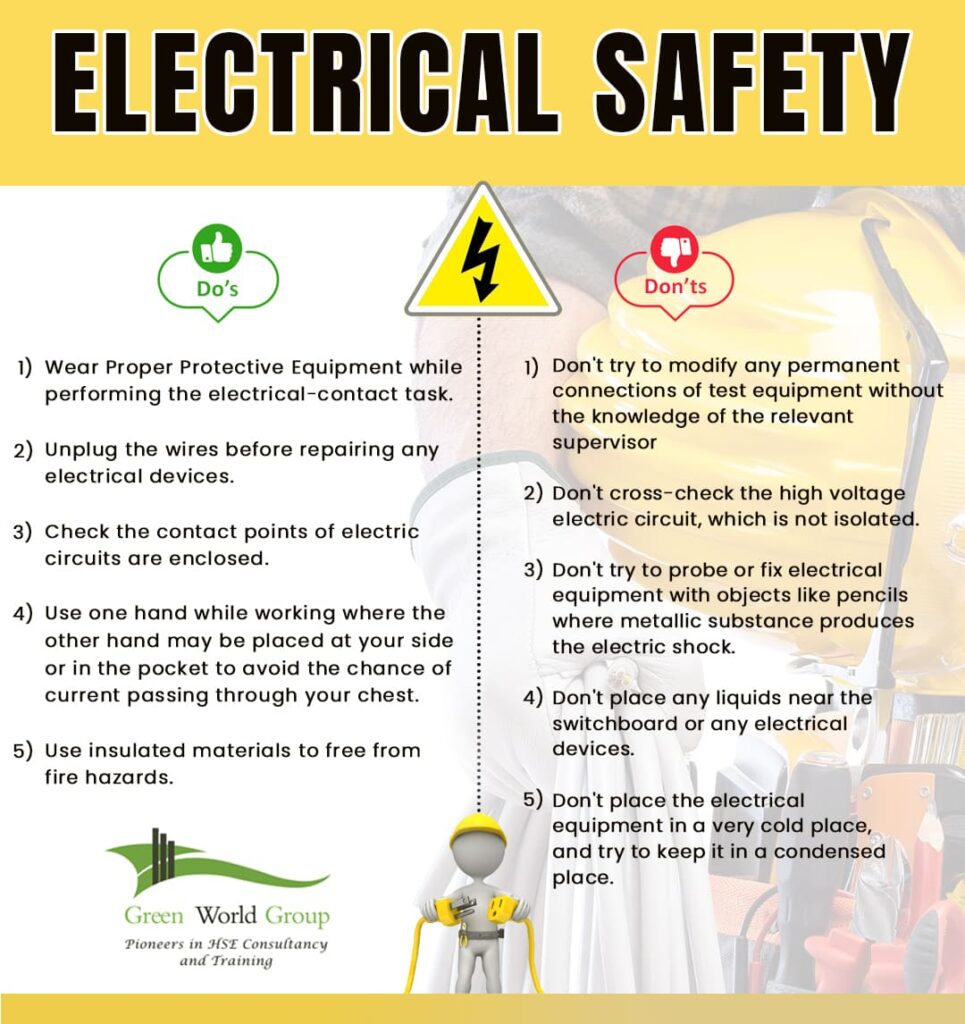
Electrical safety is crucial in preventing fires, shocks, and other hazards. Caregivers should follow these guidelines to maintain a safe environment:
Inspect Regularly: Check appliances for frayed or cracked cords. Do not use damaged appliances until they are repaired or replaced.
Avoid Improper Use: Do not use extension cords for suspended lighting or as permanent wiring. Never run cords under carpets or rugs, as pressure can fray wires and cause sparks.
Install in High-Risk Areas: Use (Ground Fault Circuit Interrupters) GFCIs in areas prone to moisture, such as bathrooms and kitchens, to prevent shocks.
Watch for: Hot light switches—turn off and replace immediately. Dimming lights, frequent breaker trips, or blown fuses—these may indicate wiring issues.
Act Immediately: Document and report any electrical safety hazards to the appropriate supervisor or authority at your workplace.
Inspect Regularly: Check appliances for frayed or cracked cords. Do not use damaged appliances until they are repaired or replaced.
Three-Prong Plugs: Use appliances with three-prong plugs only in three-slot outlets. Never force them into two-slot outlets or use incompatible extension cords.
Proper Grounding: Ensure all equipment is grounded and replace any missing outlet covers immediately.
Proper Grounding: Ensure all equipment is grounded and replace any missing outlet covers immediately.
Keep Away from Water: Avoid placing electrical appliances near wet floors, sinks, or bathtubs to reduce the risk of electric shock.
Inspect Condition: Check cords for frays or damage. Do not overload extension cords beyond their capacity.
Inspect Condition: Check cords for frays or damage. Do not overload extension cords beyond their capacity.
Avoid Improper Use: Do not use extension cords for suspended lighting or as permanent wiring. Never run cords under carpets or rugs, as pressure can fray wires and cause sparks.
Install in High-Risk Areas: Use (Ground Fault Circuit Interrupters) GFCIs in areas prone to moisture, such as bathrooms and kitchens, to prevent shocks.
Watch for: Hot light switches—turn off and replace immediately. Dimming lights, frequent breaker trips, or blown fuses—these may indicate wiring issues.
Act Immediately: Document and report any electrical safety hazards to the appropriate supervisor or authority at your workplace.
By following these electrical safety tips, caregivers can reduce the risk of accidents and create a safer environment for themselves and their clients.