Fire Safety Preparedness
LTC workers must participate in regular fire drills and be familiar with:
Use the R.A.C.E. method to handle fire emergencies effectively:
Critical Fire Safety Rules
NEVER:
If it’s safe to use a fire extinguisher, follow P.A.S.S.:
Look for “ABC” fire extinguishers that handle:
All fires—no matter how minor—must be reported and documented. Include:
LTC workers must participate in regular fire drills and be familiar with:
- Evacuation plans for each client.
- The best escape routes from the home.
- The address and cross streets for quick emergency communication.
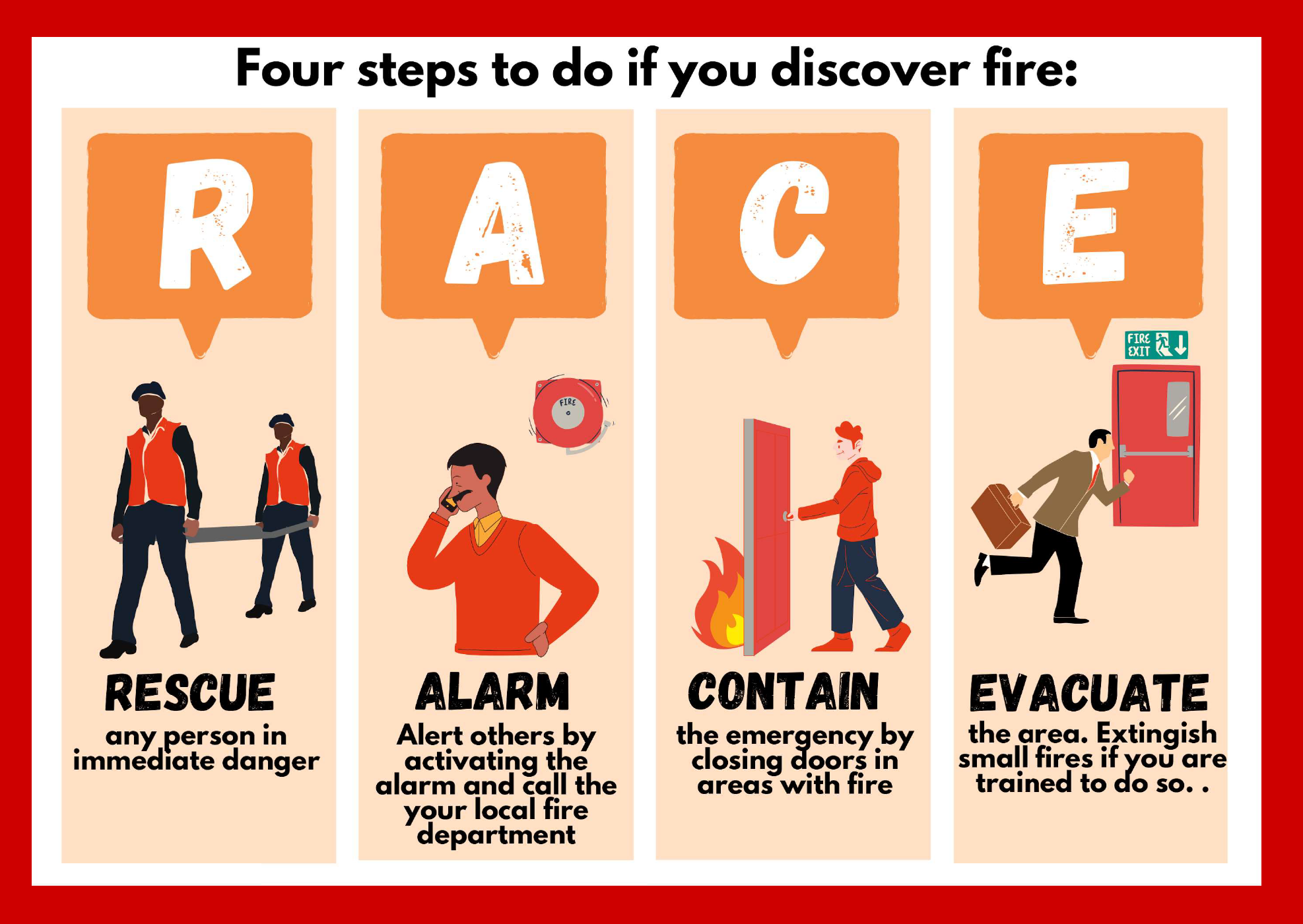
Use the R.A.C.E. method to handle fire emergencies effectively:
- R = RESCUE – Immediately move clients to safety.
- A = ALARM – Sound the alarm (e.g., fire alarm or call 911).
- C = CONFINE – Close all doors and windows to contain the fire.
- E = EXTINGUISH or EVACUATE – Use a fire extinguisher if the fire is small and manageable.
Critical Fire Safety Rules
NEVER:
- Pour water on grease or oil fires—this causes flames to spread.
- Pour water on electrical fires—this could result in electric shock.
- Re-enter a burning building for pets or valuables.
- Attempt to move burning objects out of the room.
- Use an elevator during a fire evacuation.
- Stay in a sealed room with doors closed.
- Block openings with clothing or towels to keep out smoke.
- Stay low—heat and smoke rise, so the safest air is near the floor.
- Signal for help from windows if needed.
If it’s safe to use a fire extinguisher, follow P.A.S.S.:
- P = Pull – Remove the safety pin.
- A = Aim – Point at the base of the fire.
- S = Squeeze – Press the handles to release extinguishing material.
- S = Sweep – Move the nozzle side to side until the fire is out.
- Watch the area to ensure the fire does not reignite.
- Ventilate the space to clear any lingering chemicals.
Look for “ABC” fire extinguishers that handle:
- A – Wood and paper fires.
- B – Oil and grease fires.
- C – Electrical fires.
All fires—no matter how minor—must be reported and documented. Include:
- Details of the incident.
- Actions taken (e.g., extinguishing, evacuation).
- Client conditions after the event.