Residents of adult family homes, assisted living facilities, and enhanced services facilities are protected by laws that ensure their dignity, autonomy, and safety.
Description: Residents must have access to information such as inspection reports, facility policies, and the process for making complaints.
Example: A resident asks to see the most recent health inspection report of the facility. Staff provides a copy and explains any technical terms or findings to ensure understanding.
2. The Right to Access Their Own Records
Description: Residents have the right to view their personal medical, financial, and care records.
Example: A resident requests to review their care plan to better understand the medication they are receiving. Staff arranges a meeting with the nurse to go through the plan in detail.
3. The Right to a Safe, Clean, and Comfortable Environment
Description: Facilities must maintain a homelike atmosphere that is clean, secure, and welcoming.
Example: Staff regularly clean and organize common areas, ensuring that hallways are well-lit and free from hazards to prevent falls.
4. The Right to Have Locks on Their Unit Doors
Description: Residents can have locks on their doors for privacy, with only authorized staff having access keys.
Example: A resident’s room is equipped with a lock. Staff always knock and wait for permission before entering, unless there is an emergency.
5. The Right to Have Visitors
Description: Residents can receive visitors of their choice without undue restrictions.
Example: A resident invites their family for dinner in their unit. The facility provides a private space where they can enjoy time together.
6. The Right to Personal Property
Description: Residents can keep and use their own belongings, provided it does not infringe on others’ safety or well-being.
Example: A resident decorates their room with family photos, artwork, and a favorite armchair brought from home.
7. The Right to Make Formal Complaints
Description: Residents can file complaints about the facility’s care or operations without fear of retaliation.
Example: A resident files a formal complaint about slow response times to call bells. The facility reviews the issue and takes steps to improve staff availability during peak hours.
The Role of Caregivers
Caregivers play a vital role in upholding these rights by:
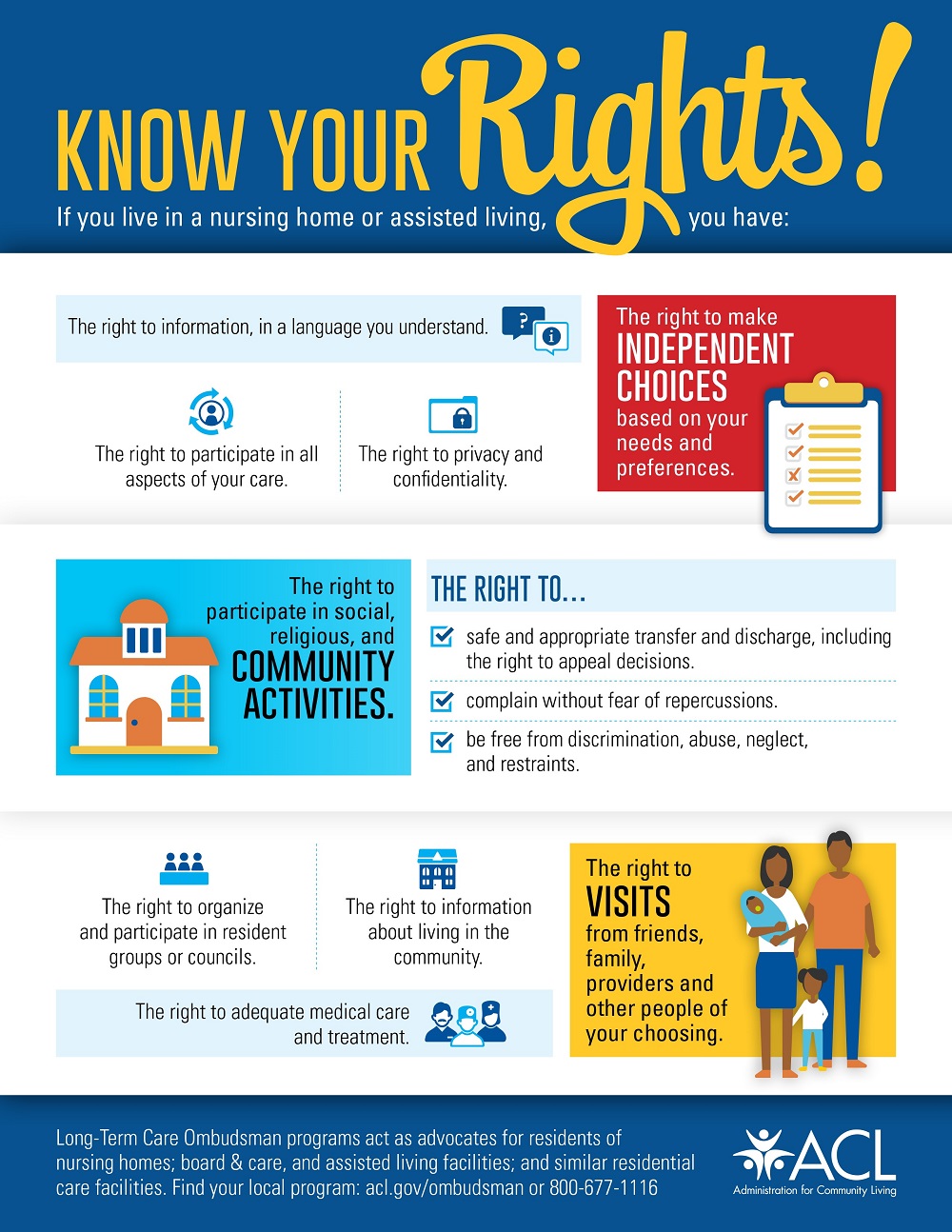
Facilities must inform residents of their rights in a language they understand, and these rights include various aspects of their well-being.
1. The Right to Information About the Facility
1. The Right to Information About the Facility
Description: Residents must have access to information such as inspection reports, facility policies, and the process for making complaints.
Example: A resident asks to see the most recent health inspection report of the facility. Staff provides a copy and explains any technical terms or findings to ensure understanding.
2. The Right to Access Their Own Records
Description: Residents have the right to view their personal medical, financial, and care records.
Example: A resident requests to review their care plan to better understand the medication they are receiving. Staff arranges a meeting with the nurse to go through the plan in detail.
3. The Right to a Safe, Clean, and Comfortable Environment
Description: Facilities must maintain a homelike atmosphere that is clean, secure, and welcoming.
Example: Staff regularly clean and organize common areas, ensuring that hallways are well-lit and free from hazards to prevent falls.
4. The Right to Have Locks on Their Unit Doors
Description: Residents can have locks on their doors for privacy, with only authorized staff having access keys.
Example: A resident’s room is equipped with a lock. Staff always knock and wait for permission before entering, unless there is an emergency.
5. The Right to Have Visitors
Description: Residents can receive visitors of their choice without undue restrictions.
Example: A resident invites their family for dinner in their unit. The facility provides a private space where they can enjoy time together.
6. The Right to Personal Property
Description: Residents can keep and use their own belongings, provided it does not infringe on others’ safety or well-being.
Example: A resident decorates their room with family photos, artwork, and a favorite armchair brought from home.
7. The Right to Make Formal Complaints
Description: Residents can file complaints about the facility’s care or operations without fear of retaliation.
Example: A resident files a formal complaint about slow response times to call bells. The facility reviews the issue and takes steps to improve staff availability during peak hours.
The Role of Caregivers
Caregivers play a vital role in upholding these rights by:
- Ensuring Awareness: Providing clear, accessible information about residents’ rights.
- Advocating for Residents: Standing up for residents if their rights are not being respected.
- Creating a Safe Environment: Maintaining cleanliness, security, and comfort.
- Respecting Privacy and Autonomy: Honoring residents’ decisions and personal boundaries.