Advance directives are legal documents that outline a client’s healthcare preferences if they become unable to make decisions. These documents help ensure their wishes are respected during critical moments.
Key Details to Know:
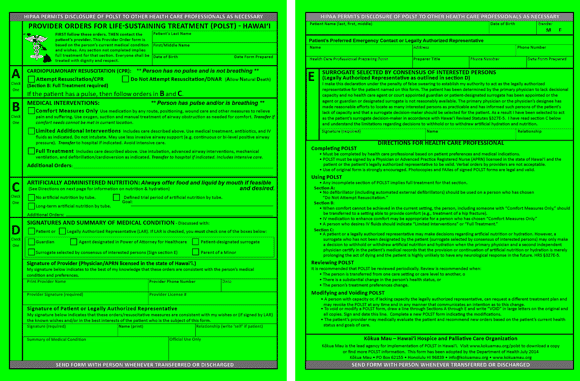
The POLST form is a physician-authorized directive designed for individuals with life-threatening illnesses. It clearly states the person’s preferences regarding life-sustaining treatments.
POLST Form Highlights:
Common examples of medical emergencies include when a client:
Key Details to Know:
- Be aware of whether a client has advance directives.
- Know the location of these documents.
- Provide the documents to emergency responders when necessary.
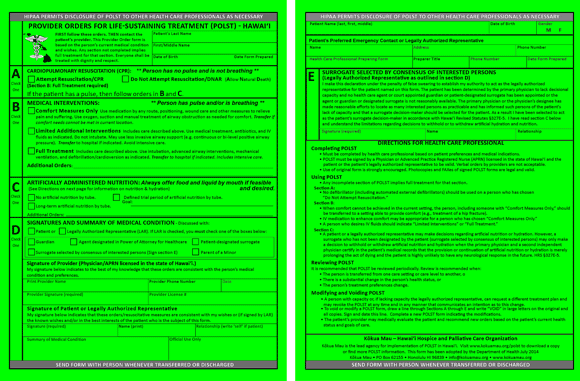
The POLST form is a physician-authorized directive designed for individuals with life-threatening illnesses. It clearly states the person’s preferences regarding life-sustaining treatments.
POLST Form Highlights:
- Signed by the client (or surrogate) and medical provider.
- Provides specific instructions for emergency situations, including:
- Whether to administer CPR.
- Preferred levels of medical intervention (e.g., full treatment, limited intervention, or comfort-focused care).
- Functions as physician orders and must be followed accordingly.
Common examples of medical emergencies include when a client:
- Experiences severe difficulty breathing.
- Loses consciousness and cannot be awakened.
- Suffers a serious fall or injury.
- Experiences a drug overdose or serious medication reaction.
- Shows sudden, serious health changes (e.g., chest pain, seizures).
- Assess the Situation: Determine the nature and severity of the emergency.
- Call for Help: Contact emergency services (911) immediately or notify the designated responder as per workplace policy.
- Follow POLST Instructions: If the client has a POLST form, comply with the documented wishes regarding resuscitation or interventions.
- Provide Basic Support: Offer first aid or CPR (if permitted by the POLST or advance directives) until help arrives.
- Communicate with Responders: Provide clear details about the situation, including the advance directives or POLST form.
- Report and Document: After the emergency is under control, report the incident and document actions taken.