Extrapyramidal side effects (EPS) are adverse effects caused by certain medications that affect the central nervous system.
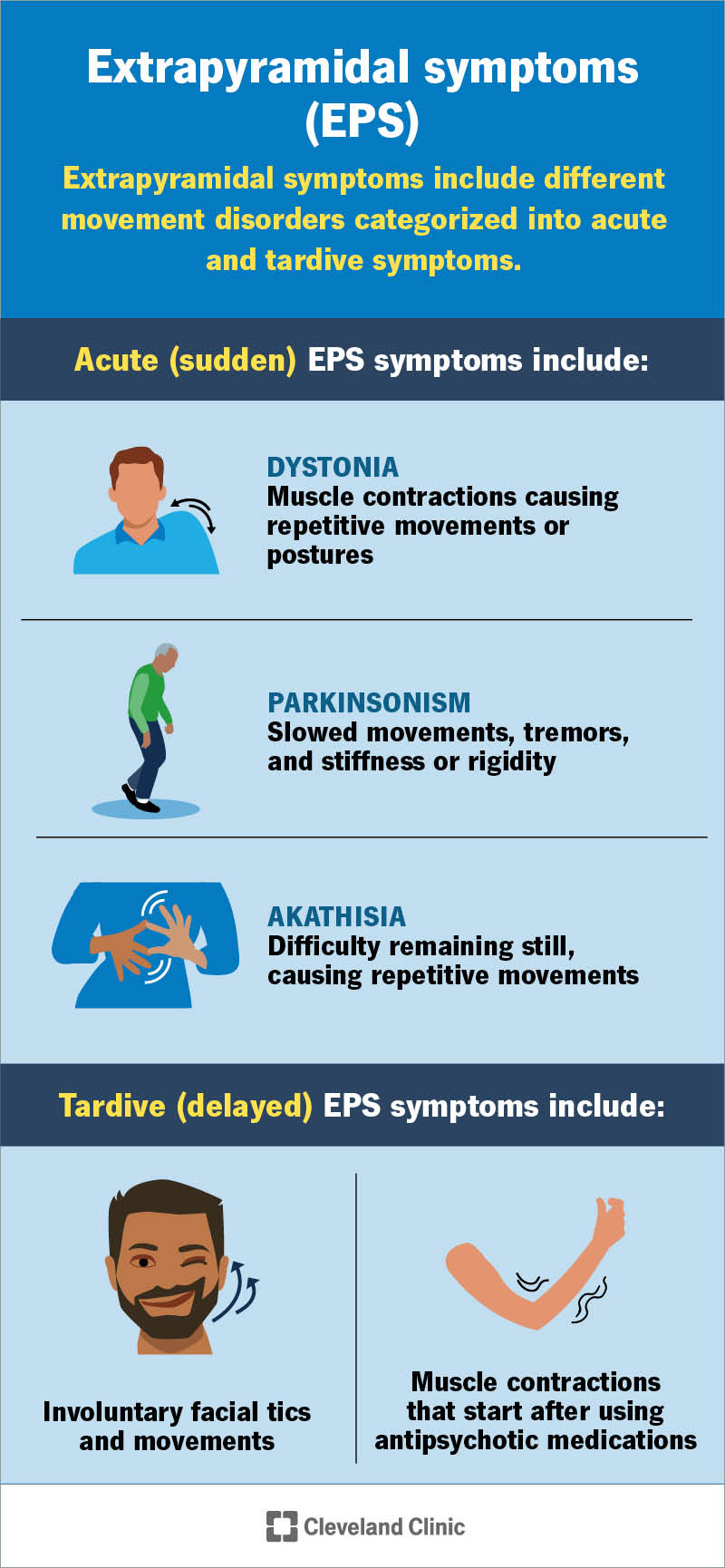
These side effects manifest as abnormal motor control or neurological symptoms and can significantly impact quality of life.
Below are the main types of EPS and their characteristics.
1. Dystonia
Dystonia is a neurological condition marked by involuntary muscle spasms and twisting of the limbs.
Signs and Symptoms:
Dyskinesia involves the impairment of normal muscle control, resulting in unusual movements.
Signs and Symptoms:
Tardive dyskinesia is a condition caused by long-term use of antipsychotic medications. It involves irreversible, involuntary movements.
Signs and Symptoms:
Parkinsonism refers to symptoms that mimic Parkinson’s disease, often caused by frequent drug use or exposure to chemicals.
Signs and Symptoms:
Akathisia is characterized by uncontrollable movements of the limbs or body, often accompanied by a feeling of restlessness.
Signs and Symptoms:
These symptoms often result from the use of medications, especially antipsychotics.
1. Dystonia
Dystonia is a neurological condition marked by involuntary muscle spasms and twisting of the limbs.
Signs and Symptoms:
- Strange facial expressions, grimacing, or distorted facial movements.
- Muscle spasms involving the lips, tongue, face, or throat.
- Involuntary eye movements, such as eyes rolling upward.
- Speech and swallowing difficulties.
- Life-threatening laryngeal (voice box) spasms that can block airflow and lead to respiratory emergencies.
Dyskinesia involves the impairment of normal muscle control, resulting in unusual movements.
Signs and Symptoms:
- Sudden, involuntary muscle movements or tics.
- Rhythmic, repetitive movements of the limbs or trunk.
Tardive dyskinesia is a condition caused by long-term use of antipsychotic medications. It involves irreversible, involuntary movements.
Signs and Symptoms:
- Jerks or tics affecting the mouth, tongue, face, arms, or legs.
- Uncontrollable facial movements, such as lip-smacking or tongue protrusion.
Parkinsonism refers to symptoms that mimic Parkinson’s disease, often caused by frequent drug use or exposure to chemicals.
Signs and Symptoms:
- Muscular rigidity and tremors.
- Slow movements and a stooped posture.
- Shuffling gait and increased risk of falls.
- Mask-like facial expressions.
- Difficulty swallowing, drooling, or choking.
- Decreased motivation or drive (apathy).
Akathisia is characterized by uncontrollable movements of the limbs or body, often accompanied by a feeling of restlessness.
Signs and Symptoms:
- A strong urge to move, with difficulty sitting still.
- Restlessness often linked to anxiety or agitation.
- Unprovoked episodes of violent behavior in severe cases.
These symptoms often result from the use of medications, especially antipsychotics.
Early identification and reporting of these side effects are essential. Medical practitioners may adjust medication dosages, switch to alternative treatments, or prescribe medications to counteract the effects.
For potentially life-threatening symptoms, such as laryngeal spasms or severe choking, immediate medical intervention is critical.
For potentially life-threatening symptoms, such as laryngeal spasms or severe choking, immediate medical intervention is critical.