Caregivers may be prohibited from using ladders in certain care settings. Be sure to review and follow your workplace policies regarding ladder use. If ladders are permitted, follow these essential safety guidelines.
Ladder Selection and Inspection
Choose the Right Ladder: Use a ladder of appropriate height for the task. It should extend at least 3 feet above the surface where you are working.
Inspect Before Use: Check for loose screws, hinges, or rungs. Do not use damaged ladders with broken or missing parts.
Safe Usage Practices
Maintain Proper Positioning: Always face the ladder while climbing up or down. Keep both hands on the ladder for stability.
Stability Matters: Place the ladder on a stable, level surface. Open it fully and engage all locks before climbing.
Use Slip-Resistant Shoes: Wear shoes with rubber soles for better traction.
No Overreaching: Move the ladder instead of stretching too far, which can lead to a loss of balance.
Carrying Tools and Loads
Keep Hands Free: Use a tool belt, rope, or hoist to carry tools or materials. Avoid carrying items in your hands while climbing.
Special Precautions
Avoid Electrical Hazards: Never use a metal ladder near power lines or live wires, as metal conducts electricity.
Use the Correct Equipment: Never substitute a chair, box, or makeshift ladder for climbing tasks. Avoid using a folding step ladder in an unfolded position.
After Use
Store Safely: Always return the ladder to its designated storage area after use.
Following these ladder safety tips can help prevent accidents and injuries. Always prioritize safety and consult your workplace policies before using a ladder.
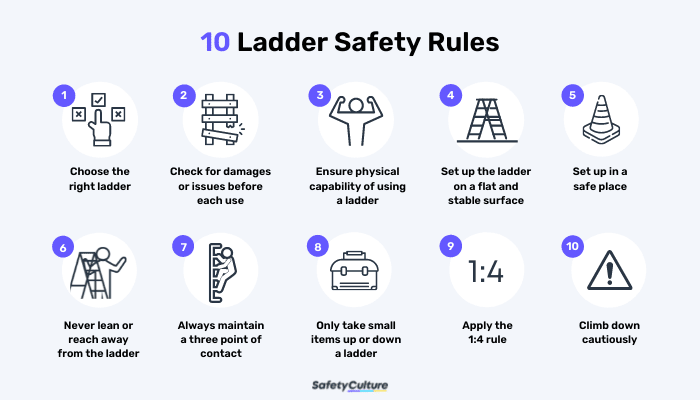
Ladder Selection and Inspection
Choose the Right Ladder: Use a ladder of appropriate height for the task. It should extend at least 3 feet above the surface where you are working.
Inspect Before Use: Check for loose screws, hinges, or rungs. Do not use damaged ladders with broken or missing parts.
Safe Usage Practices
Maintain Proper Positioning: Always face the ladder while climbing up or down. Keep both hands on the ladder for stability.
Clean the Ladder: Ensure rungs are free of mud, water, or other slippery substances.
Stability Matters: Place the ladder on a stable, level surface. Open it fully and engage all locks before climbing.
Use Slip-Resistant Shoes: Wear shoes with rubber soles for better traction.
No Overreaching: Move the ladder instead of stretching too far, which can lead to a loss of balance.
Carrying Tools and Loads
Keep Hands Free: Use a tool belt, rope, or hoist to carry tools or materials. Avoid carrying items in your hands while climbing.
Special Precautions
Avoid Electrical Hazards: Never use a metal ladder near power lines or live wires, as metal conducts electricity.
Use the Correct Equipment: Never substitute a chair, box, or makeshift ladder for climbing tasks. Avoid using a folding step ladder in an unfolded position.
After Use
Store Safely: Always return the ladder to its designated storage area after use.
Following these ladder safety tips can help prevent accidents and injuries. Always prioritize safety and consult your workplace policies before using a ladder.