Oxygen is a critical medical treatment but also a hazardous chemical due to its flammable nature. Following proper safety measures can prevent accidents and ensure safe handling.
General Safety Guidelines
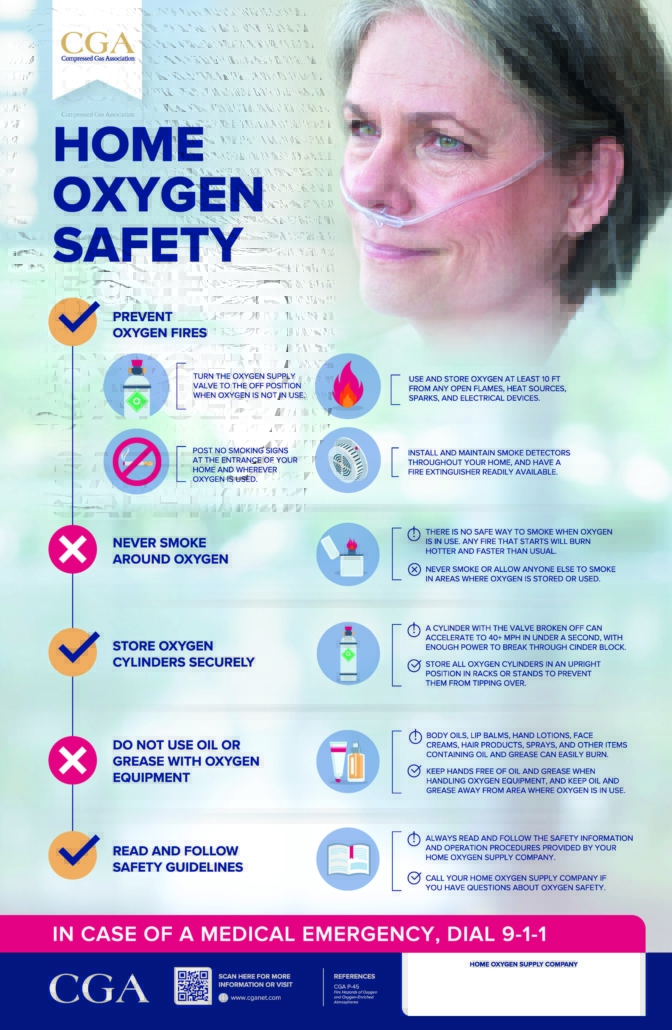
Avoid Open Flames and Sparks: Keep all flames or spark sources away from oxygen. Open flames, such as candles and cooking flames, should be at least 5 feet away. Smokers should stay at least 25 feet away, preferably in another room. Smokers may not always be aware of their lit cigarettes, increasing the risk of a fire hazard.
Avoid Flammable Products: Clients should avoid products that burn easily, such as petroleum-based items (e.g., Vaseline), nail polish remover, grease, oil, and aerosol sprays.
No Smoking While Using Oxygen: Clients must never smoke while oxygen is in use.
Oxygen Tank Storage
Ventilated Storage: Store oxygen tanks in well-ventilated areas to prevent oxygen-rich environments, which are flammable and a health hazard.
Secure Storage: Keep oxygen cylinders on their side in a storage rack or chain them to the wall. A falling cylinder can become a dangerous projectile due to escaping pressure.
Prevent Oxygen-Rich Environments: Keep doors open and rooms ventilated to prevent an oxygen buildup. The air we breathe should maintain oxygen levels between 19.5% and 23.5%; higher levels can be harmful.
Oxygen Concentrators
Proper Power Source: Plug oxygen concentrators directly into wall outlets. Avoid using extension cords or power strips, as these can cause power fluctuations, circuit overloads, or fire hazards.
Avoid Power Issues: Concentrators are sensitive to power changes and may shut down if not properly connected.
Managing Oxygen Tubing
Prevent Tripping Hazards: Oxygen tubing can twist or coil, creating trip hazards. Regularly straighten and route the tubing to keep pathways safe.
By adhering to these oxygen safety guidelines, you can minimize risks and ensure the safe use of this essential medical treatment.
General Safety Guidelines
Avoid Open Flames and Sparks: Keep all flames or spark sources away from oxygen. Open flames, such as candles and cooking flames, should be at least 5 feet away. Smokers should stay at least 25 feet away, preferably in another room. Smokers may not always be aware of their lit cigarettes, increasing the risk of a fire hazard.
Avoid Flammable Products: Clients should avoid products that burn easily, such as petroleum-based items (e.g., Vaseline), nail polish remover, grease, oil, and aerosol sprays.
No Smoking While Using Oxygen: Clients must never smoke while oxygen is in use.
Oxygen Tank Storage
Ventilated Storage: Store oxygen tanks in well-ventilated areas to prevent oxygen-rich environments, which are flammable and a health hazard.
Secure Storage: Keep oxygen cylinders on their side in a storage rack or chain them to the wall. A falling cylinder can become a dangerous projectile due to escaping pressure.
Prevent Oxygen-Rich Environments: Keep doors open and rooms ventilated to prevent an oxygen buildup. The air we breathe should maintain oxygen levels between 19.5% and 23.5%; higher levels can be harmful.
Oxygen Concentrators
Proper Power Source: Plug oxygen concentrators directly into wall outlets. Avoid using extension cords or power strips, as these can cause power fluctuations, circuit overloads, or fire hazards.
Avoid Power Issues: Concentrators are sensitive to power changes and may shut down if not properly connected.
Managing Oxygen Tubing
Prevent Tripping Hazards: Oxygen tubing can twist or coil, creating trip hazards. Regularly straighten and route the tubing to keep pathways safe.
By adhering to these oxygen safety guidelines, you can minimize risks and ensure the safe use of this essential medical treatment.