Restraints in caregiving are rarely permitted and are generally considered dangerous.
Physical Restraints
Involve the use of physical force without devices to restrict a vulnerable adult’s movement.
Devices attached to or near a person’s body that limit movement and cannot be easily removed by the individual.
Examples:
The inappropriate use of medications to control mood, mental state, or behavior that do not address medical conditions.
Examples:
While not classified as a restraint, it involves confining someone to a space against their will.
Examples:
Risks Associated with Restraints
Restraints can result in:
Restraints are only allowed in Adult Family Homes or Enhanced Services Facilities under these strict conditions:
Prohibition: Restraints may never be used for:
Alternatives to Restraints: Use de-escalation techniques, verbal redirection, or environmental modifications to manage challenging situations.
Restraints are not a safe or ethical solution for caregiving. Their use is highly restricted and requires medical justification, client consent, and strict adherence to care plans. Prioritize the dignity, autonomy, and well-being of clients in all situations.
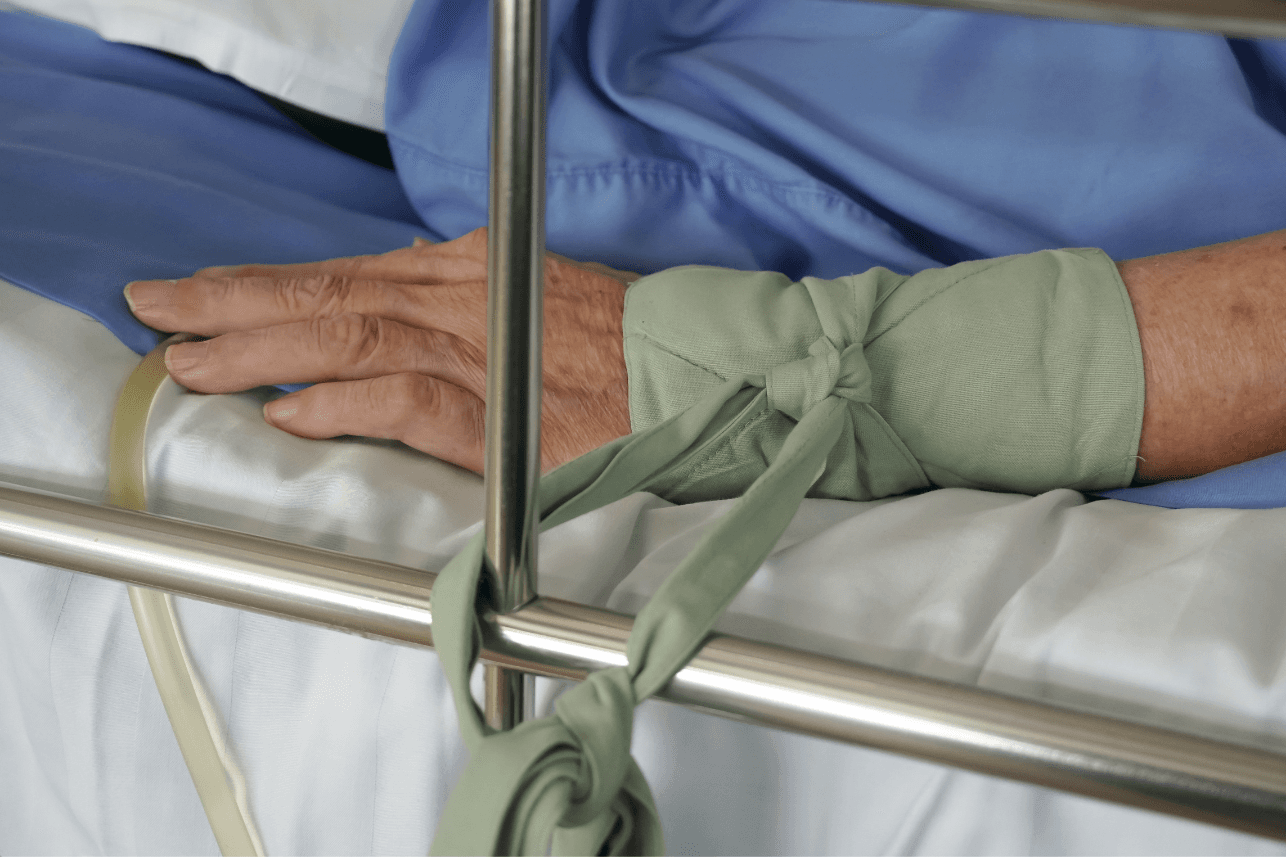
They can cause both physical and emotional harm and may even lead to death.
Restraints should never be used for discipline or convenience, as they do not enhance safety.
Types of Restraints
Types of Restraints
Physical Restraints
Involve the use of physical force without devices to restrict a vulnerable adult’s movement.
Examples:
- Holding someone down.
- Grabbing to restrict motion.
Devices attached to or near a person’s body that limit movement and cannot be easily removed by the individual.
Examples:
- Belts, ties, or restrictive clothing.
- Bed rails or chairs that prevent getting up.
The inappropriate use of medications to control mood, mental state, or behavior that do not address medical conditions.
Examples:
- Medications used for convenience or without proper monitoring.
While not classified as a restraint, it involves confining someone to a space against their will.
Examples:
- Locking doors or using barriers to prevent movement.
- Forcing someone to stay in bed.
Risks Associated with Restraints
Restraints can result in:
- Physical harm: Injuries, pressure sores, restricted circulation, or even death.
- Emotional harm: Trauma, anxiety, or loss of dignity.
- Reduced quality of care: Erodes trust between caregivers and clients.
Restraints are only allowed in Adult Family Homes or Enhanced Services Facilities under these strict conditions:
- Medical necessity: Used only for medical purposes or specific symptoms.
- Last resort: All other interventions have been exhausted.
- Client consent: Included in the client’s care plan with their informed consent.
- Supervised use: Applied under strict controls and ongoing supervision.
Prohibition: Restraints may never be used for:
- Discipline.
- Staff convenience.
Alternatives to Restraints: Use de-escalation techniques, verbal redirection, or environmental modifications to manage challenging situations.
Restraints are not a safe or ethical solution for caregiving. Their use is highly restricted and requires medical justification, client consent, and strict adherence to care plans. Prioritize the dignity, autonomy, and well-being of clients in all situations.